
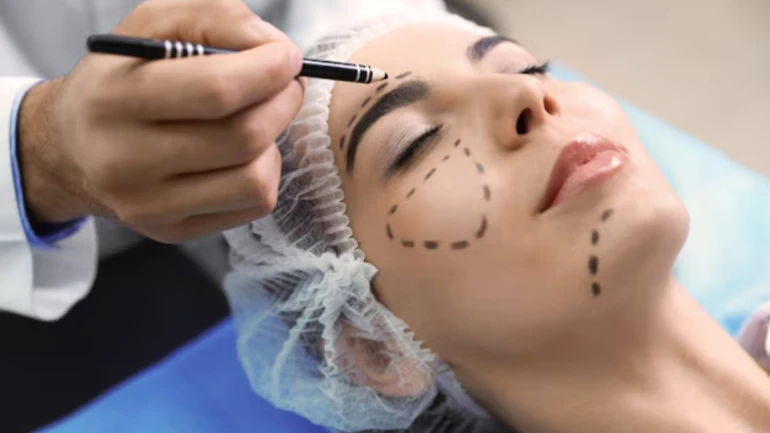
A small, refined nose with a gently lifted tip and a smooth, delicate profile has become increasingly popular in cosmetic surgery. Often described online as a “Barbie nose,” this aesthetic is associated with a petite-looking nose, a defined bridge and a slightly upturned nasal tip.
But the name can make the procedure sound simpler than it actually is.
A Barbie nose is not a separate type of rhinoplasty or a standard surgical technique. It is an aesthetic description of a particular nasal appearance. Achieving a similar look may involve reshaping the nasal bones, cartilage, bridge or tip, depending on the individual's anatomy. For patients considering this look, understanding recovery, risks and candidacy is far more important than simply asking for a “Barbie nose.”
Dr. Parag Telang, a popular plastic and cosmetic surgeon in Mumbai, approaches rhinoplasty by assessing the nose in relation to the entire face. At DesignerBodyz, the objective is not to reproduce one template on every patient, but to determine what changes can create a harmonious and natural-looking result for that particular face.
What Is Barbie Nose Rhinoplasty?
“Barbie nose rhinoplasty” generally refers to rhinoplasty designed to create a small, refined and slightly upturned nasal appearance.
Depending on the patient's starting anatomy, the desired result may involve:
- A smoother or more refined nasal bridge
- A narrower appearance of the nose
- A more defined nasal tip
- A subtle upward rotation of the tip
- Reduction of a dorsal hump, when present
- Improved symmetry
- Better overall proportion between the nose and the rest of the face
However, these changes cannot simply be applied in the same way to everyone.
The nasal bones, cartilage, skin thickness, facial proportions and breathing anatomy vary considerably between individuals. A nose that looks attractive on one face may look disproportionate on another.
That is why modern rhinoplasty is generally planned around facial harmony rather than a fixed “Barbie” template.
How Is Barbie Nose Rhinoplasty Performed?
Barbie nose rhinoplasty can be performed using either an open or closed approach, depending on the surgical plan.
An open rhinoplasty involves a small incision across the columella—the strip of tissue between the nostrils, allowing greater access to the nasal framework. In a closed approach, the incisions are made inside the nose.
Neither approach is automatically better for every patient. The choice depends on the complexity of the correction and the surgeon's assessment.
Importantly, rhinoplasty is not simply about making the nose smaller. The nose needs to remain structurally supported and functionally sound after surgery.
Who Is a Good Candidate for Barbie Nose Rhinoplasty?
A good candidate is not necessarily someone who wants the smallest possible nose.
Instead, suitable candidates generally have realistic expectations and understand that the final result must be adapted to their anatomy.
You may be considered for rhinoplasty if you:
- Are physically healthy enough for elective surgery
- Have realistic expectations
- Are unhappy with the size or shape of your nose
- Want to improve nasal proportions or facial balance
- Have a nasal hump, broad bridge or less-defined tip
- Want subtle refinement of the nasal profile
- Have completed most facial growth
- Understand the limitations of surgery
- Are prepared for the recovery period
The surgeon will also evaluate whether the requested shape is structurally achievable without compromising nasal function.
Who May Not Be a Good Candidate for Barbie Rhinoplasty?
Rhinoplasty may need to be postponed or reconsidered if a person has an unstable medical condition, unrealistic expectations or expects the surgeon to reproduce an exact celebrity or social-media appearance.
Similarly, if the desired nose would require excessive reduction that could compromise structural support or breathing, the surgeon may recommend a more conservative result.
This is particularly important with the Barbie nose aesthetic because “smaller” does not automatically mean “better.”
A very narrow or excessively upturned nose may look unnatural on certain facial structures and may create functional problems if too much supporting tissue is removed.
Barbie Nose Rhinoplasty Recovery Timeline
Recovery is an important part of the rhinoplasty journey. The nose does not reach its final appearance immediately after surgery.
| Recovery Period | What You May Experience |
| First Week | Swelling, bruising, nasal congestion and mild discomfort are common. A splint may be used. |
| Around 1–2 Weeks | External splinting is generally completed according to the surgeon's protocol. Bruising usually starts improving. |
| 2–4 Weeks | Most obvious bruising has settled, although swelling remains. Many patients gradually return to routine activities. |
| 1–3 Months | The nose begins to look more refined as swelling continues to decrease. |
| 3–6 Months | Further definition and settling occur, particularly around the tip. |
| 6–12 Months | The long-term shape becomes increasingly apparent as residual swelling resolves. |
| 12 Months or Longer | Final refinement may continue, particularly in patients with thicker skin or more complex surgery. |
The recovery timeline varies depending on the surgical technique, extent of reshaping, individual healing and whether the procedure involved structural reconstruction.
When Will You See the Final Barbie Nose Result?
One of the biggest misconceptions about rhinoplasty is that the postoperative appearance is the final result.
Immediately after surgery, swelling can make the nose appear larger, less defined or temporarily uneven.
The tip often takes longer to settle than the upper part of the nose, particularly when extensive tip refinement has been performed.
Patients therefore need patience during recovery. Comparing the nose every day can also make normal fluctuations in swelling seem more dramatic than they actually are.
The final result is generally assessed much later than the first few postoperative weeks.
What Are the Risks of Barbie Nose Rhinoplasty?
Like any surgical procedure, rhinoplasty carries potential risks.
These can include:
- Bleeding
- Infection
- Persistent swelling
- Temporary or altered sensation
- Nasal asymmetry
- Difficulty breathing
- Scarring
- Unsatisfactory cosmetic outcome
- Changes in the nasal shape over time
- Need for revision surgery
There is also a specific consideration with highly refined or significantly rotated noses: over-reduction can compromise structural support and potentially affect nasal function.
This is why an experienced surgeon needs to balance aesthetic goals with the structural requirements of the nose.
Can the Barbie Nose Look Natural?
Yes, but the outcome depends heavily on how the aesthetic goal is interpreted.
A natural-looking result does not necessarily mean an unchanged nose. It can mean that the nose appears refined while still fitting comfortably with the patient's eyes, cheeks, lips, chin and overall facial proportions.
A very small or dramatically upturned nose may look artificial if it does not suit the rest of the face.
For this reason, the most appropriate goal is often a refined version of your own nose rather than an exact copy of someone else's nose.
How Does a Surgeon Plan the Right Nose for Your Face?
During a consultation, the surgeon may assess:
- Nasal bridge height and width
- Nasal tip shape
- Tip projection and rotation
- Nostril size and shape
- Skin thickness
- Facial proportions
- Chin and jaw projection
- Nasal septum and airway
- Existing asymmetry
- Previous nasal surgery or injury
Photographs and, where appropriate, digital imaging can help patients understand potential changes. However, computer-generated images should be treated as planning tools rather than guarantees of the surgical result.
Barbie Nose Rhinoplasty at DesignerBodyz
At DesignerBodyz, Dr. Parag Telang focuses on creating a rhinoplasty plan that considers both aesthetics and nasal structure.
As a popular plastic and cosmetic surgeon in Mumbai, Dr. Telang evaluates whether the desired Barbie-inspired appearance is compatible with the patient's facial proportions and nasal anatomy before deciding what surgical modifications are appropriate.
For some patients, only subtle refinement may be necessary. Others may require more extensive bridge or tip work. If functional concerns are present, those also need to be considered as part of the surgical plan.
The objective is not to create an identical nose for every patient. It is to create a result that looks balanced, proportionate and appropriate for the individual face.
FAQs About Barbie Nose Rhinoplasty
Is Barbie nose rhinoplasty a separate type of nose surgery?
No. “Barbie nose” is primarily a descriptive aesthetic term rather than a distinct surgical procedure. A surgeon may use different rhinoplasty techniques to create the desired characteristics depending on the patient's anatomy.
How long does Barbie nose rhinoplasty take to heal?
Most visible bruising and swelling improve considerably within the first few weeks, but the nose continues to settle for several months. The final result may take around a year or longer to fully mature, particularly around the nasal tip.
Will my Barbie nose look exactly like the reference picture I show my surgeon?
Not necessarily. A reference photograph can communicate your aesthetic preference, but the result must be adapted to your bone structure, cartilage, skin thickness and facial proportions. An exact replica may not be anatomically or functionally appropriate.
Does Barbie nose rhinoplasty leave a scar?
It depends on the surgical approach. Closed rhinoplasty leaves incisions inside the nose. Open rhinoplasty involves an additional small incision on the columella, which generally heals into a fine scar that may become difficult to notice over time.
Can a Barbie nose be created without surgery?
Some non-surgical treatments can temporarily alter the appearance of certain nasal features, but they cannot reproduce all the structural changes possible with rhinoplasty. Dermal fillers, for example, add volume rather than physically removing or reshaping nasal bone or cartilage.
Can Barbie nose rhinoplasty improve breathing too?
If structural nasal problems are contributing to breathing difficulty, functional correction may sometimes be incorporated into rhinoplasty. However, cosmetic rhinoplasty alone should not be assumed to improve breathing, and the airway should be evaluated before surgery.
About the Author