
 2026-10-06
- |
- By Dr. Parag Telang
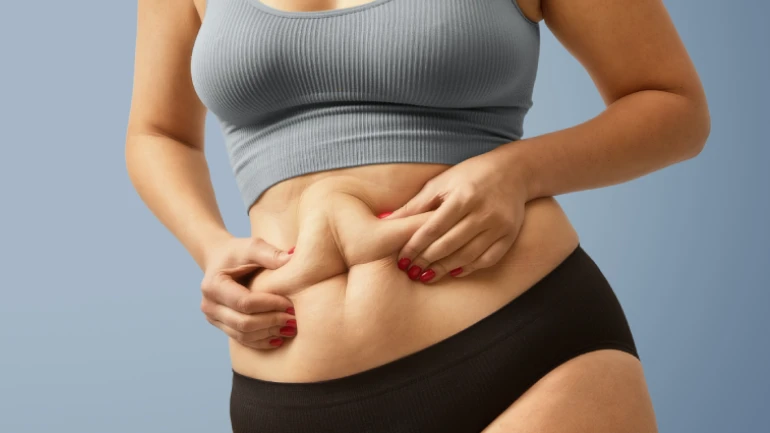
When people search for the liposuction success rate, they are usually asking a more practical question: If I undergo liposuction, how likely am I to get the body contour I am hoping for?
The answer cannot be reduced to one percentage. Liposuction is a body-contouring procedure and its outcome depends on factors such as the amount and location of fat, skin elasticity, body weight, surgical technique, healing and, importantly, whether the patient's expectations match what liposuction can actually achieve.
At DesignerBodyz, Dr. Parag Telang, a popular plastic and cosmetic surgeon in Mumbai, approaches liposuction as a contouring procedure rather than a shortcut for weight loss. The aim is to selectively remove stubborn deposits of subcutaneous fat and create a smoother, more proportionate body contour while taking the patient's anatomy and skin quality into account.
So, what do the numbers actually tell us? How satisfied are patients after liposuction? What are the chances of complications? And how long does it take before you can see the final result?
Let's look at what the available evidence says.
Is There a Fixed Success Rate for Liposuction?
Not really.
Unlike some medical treatments where success can be measured against a clearly defined clinical endpoint, cosmetic liposuction has no single internationally accepted “success rate.”
Researchers may measure:
- Patient satisfaction
- Improvement in body contour
- Complication rates
- Revision surgery
- Changes in body measurements
- Patient-reported quality of life
This means that quoting a figure such as “95% success rate” without explaining what success means can be misleading.
A better way to evaluate liposuction is to look at patient satisfaction, safety data and expected contour improvement together.
How Common Is Liposuction Around the World?
The popularity of liposuction itself provides some useful context.
According to the ISAPS Global Survey 2024, approximately 2,087,189 liposuction procedures were performed worldwide by plastic surgeons in 2024, making liposuction the second most commonly performed surgical aesthetic procedure globally. It accounted for approximately 12% of all surgical procedures recorded in the survey. [Source: ISAPS Global Survey 2024]
The same survey recorded more than 1.79 million liposuction procedures among women and approximately 295,000 among men worldwide in 2024. [Source: ISAPS Global Survey 2024]
These numbers show how widely the procedure is performed, but popularity should not be confused with guaranteed results. The quality of the outcome still depends heavily on patient selection, surgical planning and technique.
What Does Indian Data Tell Us About Liposuction Results?
Indian data is particularly useful because body-contouring expectations and surgical practices can differ between populations.
An Indian survey published in the Indian Journal of Plastic Surgery, involving plastic surgeons performing liposuction, found that the majority of surgeons reported patient satisfaction rates in the 75–90% range in their practices. [Source: Indian Journal of Plastic Surgery, “Current trends of liposuction in India: Survey and Analysis”]
The Indian survey also reported that 42.1% of responding surgeons considered contour deformities the most common complication, while 30.6% considered seroma to be the most common. [Source: Indian Journal of Plastic Surgery]
These figures represent surgeons' survey responses, not the percentage of all Indian patients who experience those complications, so they should not be interpreted as individual patient risk.
What Results Can You Actually Expect From Liposuction?
The most realistic expectation is improved body contour, not dramatic weight loss.
Liposuction is designed to remove localised deposits of subcutaneous fat from areas such as:
- Abdomen
- Waist and flanks
- Thighs
- Hips
- Arms
- Back
- Chin and neck
- Male chest in selected cases
The improvement can make the treated area look more defined and proportionate.
However, liposuction cannot correct every type of abdominal or body concern. For example, significant loose skin may require a skin-removal procedure such as a tummy tuck. Visceral fat located around the internal organs also cannot be removed through conventional liposuction.
When Will You See Liposuction Results?
This is one of the biggest sources of confusion.
You generally will not see the final result immediately after surgery.
Swelling and fluid retention can temporarily make the treated area look larger or uneven. As healing progresses, the contour gradually becomes clearer.
Liposuction Results Timeline
| Time After Surgery | What You Can Generally Expect |
| First Few Days | Swelling, bruising, soreness and tightness are common. The treated area may not resemble the final contour. |
| 1–2 Weeks | Bruising usually begins to settle. Swelling remains, but early contour changes may become noticeable. |
| 3–6 Weeks | More of the treated contour becomes visible as swelling decreases. Compression garments may still be used according to the surgeon's instructions. |
| 2–3 Months | A significant portion of the swelling has generally settled and the body contour becomes more defined. |
| 3–6 Months | The result continues to refine as residual swelling resolves and tissues settle. |
| Around 6 Months and Beyond | The long-term contour can be assessed more reliably, although the exact timeline varies between patients and procedures. |
Mayo Clinic notes that swelling can take weeks to months to fully settle and that final results are not immediate. [Mayo Clinic, Liposuction]
So, judging the outcome during the first few weeks can be premature.
What Factors Determine Liposuction Success?
The outcome is influenced by much more than the surgical procedure itself.
1. Skin Elasticity
Good skin elasticity generally allows the skin to contract more effectively around the newly contoured area.
If the skin has significant laxity, removing fat alone may leave loose skin behind.
2. Stable Body Weight
Liposuction is not a substitute for weight management. Significant weight gain after surgery can enlarge remaining fat cells and alter the contour.
Patients who are relatively close to their healthy or target weight and have stable weight are generally better positioned for predictable contouring.
3. Location and Amount of Fat
Some fat deposits respond particularly well to liposuction, while others may be influenced by skin laxity, muscle structure or visceral fat.
4. Surgical Technique
The surgeon needs to determine how much fat can be safely removed and where it should be removed to maintain natural proportions.
Over-removal in one area can produce an unnatural appearance just as under-treatment can leave the desired contour incomplete.
5. Patient Expectations
This may be one of the most important factors.
Liposuction is intended to reshape the body, not transform the body into a completely different physique.
A patient who understands this difference is more likely to have realistic expectations about the outcome.
How Long Do Liposuction Results Last?
The contouring effect can be long-lasting when a person maintains a relatively stable weight.
But “long-lasting” does not mean “immune to change.”
Ageing, pregnancy, major weight fluctuations and changes in lifestyle can all influence body shape over time.
The surgery removes selected fat cells, but it does not stop the body's natural biological changes.
How Dr. Parag Telang Approaches Liposuction at DesignerBodyz
At DesignerBodyz, Dr. Parag Telang evaluates liposuction candidates based on their individual anatomy rather than promising a predetermined percentage of fat removal or a guaranteed outcome.
As a popular plastic and cosmetic surgeon in Mumbai, Dr. Telang considers factors such as fat distribution, skin elasticity, body proportions, existing scars, overall health and the patient's desired contour before developing a surgical plan.
For some patients, liposuction alone may be appropriate. Others with significant excess skin may require a tummy tuck or another body-contouring procedure. In selected cases, different techniques may be combined to achieve a more balanced result.
This individualised approach is important because the same number of litres removed from two different bodies would not necessarily produce the same result.
FAQs about Liposuction Success Rate
1. What is the success rate of liposuction?
There is no universally accepted success rate for liposuction. Studies use different definitions of success, but patient-satisfaction studies generally report high satisfaction among appropriately selected patients. An Indian survey found that most responding surgeons reported satisfaction rates between 75% and 90% in their practices. [Indian Journal of Plastic Surgery]
2. How soon can I see results after liposuction?
Some contour changes may be visible within a few weeks, but swelling can obscure the result. The contour generally becomes clearer over the following two to three months, with further refinement over several months. [Mayo Clinic]
3. Does liposuction permanently remove fat?
Fat cells removed during liposuction are permanently removed from the treated area. However, remaining fat cells can enlarge with significant weight gain, potentially changing the overall result.
4. Does a higher amount of fat removal mean a better result?
No. The goal is not to remove the maximum possible amount of fat. Safe and controlled removal that produces a balanced contour is more important than the volume removed.
5. Can liposuction fail?
Liposuction may produce less improvement than expected, or contour irregularities may occur. Unrealistic expectations, significant skin laxity, inadequate treatment or subsequent weight changes can affect satisfaction. In some cases, revision surgery may be considered after adequate healing.
6. How can I improve my chances of getting a good liposuction result?
Choosing an appropriately qualified plastic surgeon, maintaining a relatively stable weight, having realistic expectations, following pre- and post-operative instructions and allowing adequate time for swelling to resolve can all contribute to a more predictable outcome.