
 2026-09-21
- |
- By Dr. Parag Telang
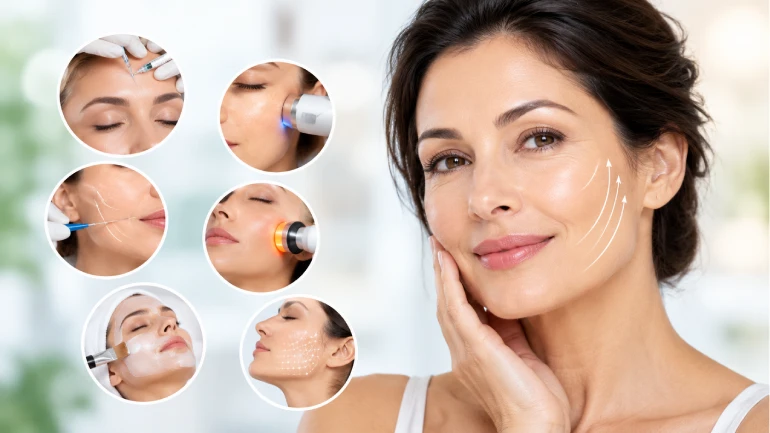
One of the first noticeable signs of facial ageing for many people after 40 is not deep wrinkles, but a gradual descent of the facial appearance. The face may start to look more tired, the cheeks may appear less full, the jawline may lose definition, or the skin may not feel as firm as before. After a certain age, several changes appear at once, which makes it difficult to determine which treatment would make a difference.
A facial rejuvenation treatment after 40 should not be approached as a simple search for a treatment that makes someone “look younger." Some concerns may be related to skin quality, while others may be related to volume loss or descent of facial tissues.
At Designer Bodyz, Dr. Parag Telang offers both surgical and non-surgical approaches to facial rejuvenation. The treatments are tailored according to the type and extent of facial ageing rather than assuming that every patient over 40 needs the same treatment. His approach to facial rejuvenation focuses on creating results that align with the patient’s facial features.
Why Does Facial Ageing Become More Noticeable After 40?
Facial ageing becomes more visible when collagen and elastin production declines, which affects skin firmness and elasticity. Over time, these changes can contribute to:
- Fine lines becoming more established
- Loss of cheek fullness
- Deeper folds around the nose and mouth
- Hollowing around the temples or eyes
- Less defined jawline
- Development of jowls
- Looser skin around the lower face and neck
These changes do not occur at the same rate in every person. Factors such as sun exposure, lifestyle, weight fluctuations, etc. may influence how facial ageing develops.
What Are the Best Facial Rejuvenation Options After 40?
A suitable treatment depends on what the cause and requirements are. Someone with forehead lines may not need a lifting procedure, while a person with early volume loss may benefit from fillers. The options include injectables, volume restoration, skin-rejuvenation treatments, and facial surgery.
1. Dermal Fillers: Facial volume changes with age; the cheeks may look flatter and certain facial contours may lose their fullness. Dermal fillers restore volume in selected areas and may be useful in treating volume loss. Fillers are used in areas such as the cheeks, temples and selected facial contours.
Fillers add volume, but they do not physically remove loose skin or facial tissues.
2. Anti-Wrinkle Treatments: Repeated facial muscle movement creates dynamic lines, especially on the forehead, between the eyebrows and around the eyes. Anti-wrinkle injections can temporarily reduce the muscle activity responsible for these lines.
Patients with expression-related ageing are recommended these treatments.
3. Thread Lifts: Thread lifts are considered for selected individuals with early or mild tissue laxity who want to lift their skin without undergoing a traditional facelift. Its suitability depends on the degree of laxity and the patient’s goals.
Thread lifts may be considered in a rejuvenation plan, but a surgical facelift may offer a more appropriate level of correction for significant skin laxity.
4. Fat and Nano-Fat Grafting: Fat-based facial rejuvenation is considered when an individual has areas of volume loss and suitable donor fat in the body. Fat grafting restores fullness using the patient’s own fat, while nano-fat techniques may be considered in case of skin quality as well as volume.
This can be particularly relevant for facial ageing because volume loss and changes in skin quality often occur together.
5. Skin Rejuvenation and Energy-Based Treatments: Some individuals over 40 prioritise skin quality over facial sagging. Sun damage, uneven pigmentation, rough texture, enlarged pores and fine lines can become more visible with age.
Energy-based treatments may be considered in selected patients to address skin ageing. Their suitability depends on the individual's skin type, concern and treatment goals.
When Does a Facelift Make More Sense After 40?
A facelift is not decided based on age alone. A person in their early 40s may have significant lower-face laxity, while another person in their 50s may have good skin elasticity.
A facelift may become a more appropriate consideration when ageing involves:
- Noticeable jowling
- Loss of a defined jawline
- Significant lower-face sagging
- Deepening folds associated with tissue descent
- Loose skin around the lower face
- Neck laxity occurring alongside lower-face ageing
A facelift can address these structural changes more directly than injectables or skin treatments.
Mini Facelift or Full Facelift After 40: Which is More Appropriate?
A mini facelift is considered when the ageing changes are limited to the lower face, but a full facelift can provide a more comprehensive correction when there is more facial and neck laxity.
Whether to consider a mini facelift or a full facelift, it is determined by the extent of tissue laxity, skin excess, facial anatomy and the correction goals are contributing factors. Facelift surgery is personalised; hence, two patients of the same age may be recommended different surgical approaches.
Is Facial Rejuvenation After 40 About Looking Younger?
Not necessarily.
Many patients are less interested in looking dramatically younger and more interested in looking less tired, more refreshed or more like themselves.
This distinction matters because an overly aggressive approach can create a result that does not fit the patient's facial characteristics.
The objective of facial rejuvenation should therefore be to address the changes that make an individual look older while preserving the features that make the face recognisable and natural.
For patients considering Facial Rejuvenation in Mumbai, this is one reason treatment planning is more important than simply selecting the most intensive procedure available.
How Should Patients Decide Which Treatment Is Right?
While deciding which treatment to choose, it is important to know the underlying cause of the ageing concern. A patient with forehead lines may need an entirely different approach from a person who is concerned about jowls.
During a consultation, several factors can be assessed together:
- Skin quality
- Facial volume
- Degree of tissue laxity
- Facial proportions
- Age-related changes
- Previous cosmetic treatments
- Desired degree of correction
At Designer Bodyz, Dr. Parag Telang’s facial rejuvenation procedures include both surgical and non-surgical options, so the patients may decide on a particular treatment. People seeking facial rejuvenation surgery in Mumbai may benefit from this approach.
Conclusion
There are various treatments that can be considered the best facial rejuvenation treatment after 40, depending on what is actually required by the patients.
Fine lines caused by facial movement may respond to anti-wrinkle treatment, while a volume loss may be addressed with fillers or fat-based rejuvenation and so on. The goal is not to reverse ageing, but to identify the causes and changes to choose an approach that addresses the concerns without changing features.
At Designer Bodyz, Dr. Parag Telang can assess these concerns across both surgical and non-surgical facial rejuvenation options. For patients exploring facial rejuvenation in Mumbai, a personalised consultation can help determine whether the suitable approach involves skin treatment, volume restoration, a minimally invasive procedure or facial rejuvenation surgery.
Frequently Asked Questions (FAQs)
Can facial rejuvenation improve an ageing face without changing its basic features?
Yes, the objective of many rejuvenation treatments is to address specific signs of ageing while preserving the person’s existing facial proportions and identity.
Is facial rejuvenation after 40 different for men and women?
The ageing processes are similar, but facial anatomy, skin characteristics and hair patterns can differ.
Can someone in their early 40s need a facelift?
Age alone does not determine if a surgery is appropriate. Some individuals develop significant laxity earlier than others, while some retain good tissue elasticity later in life.
Why do two people of the same age need completely different facial rejuvenation treatments?
Facial ageing is influenced by genetics, skin quality, facial structure, fat distribution, sun exposure and lifestyle.
Does a facelift address skin quality as well as facial sagging?
A facelift addresses tissue descent and excess skin. Concerns such as pigmentation or sun damage may require separate skin-focused treatments.
What should be discussed during a facial rejuvenation consultation?
Patients can discuss which facial changes bother them most, previous cosmetic treatments, the degree of change they want, and their preference regarding a non-surgical or surgical approach.